
Subscribe your school for £50 + VAT a yearAccess for every teacher · Years 3–6 · unlimited Question GeneratorSubscribe →
Subscribe your department for £70 + VAT a yearAccess for every teacher · KS2 to KS5 · unlimited Question GeneratorSubscribe →
Entry Level · AQA and Edexcel

Entry Level maths. Every outcome.

Ready-made worksheets for every outcome, plus the Question Generator to make more. Grouped by unit and level for AQA and Edexcel Entry Level.

Unlock MathsBox for just £70 + VAT a year

Ready-made worksheets. Each outcome has 3.

Each outcome has 3 ready-made worksheets, all with answers and ready to print.

  • AQA and Edexcel Entry Level
  • Grouped by unit, then Level 1, 2 and 3
  • Answers with every worksheet
View topics covered
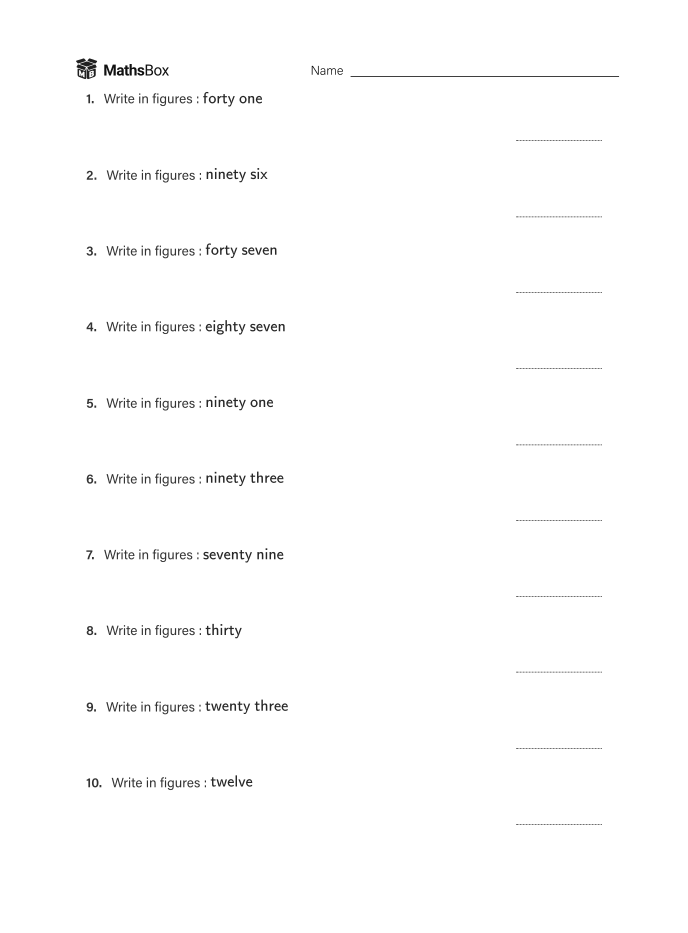
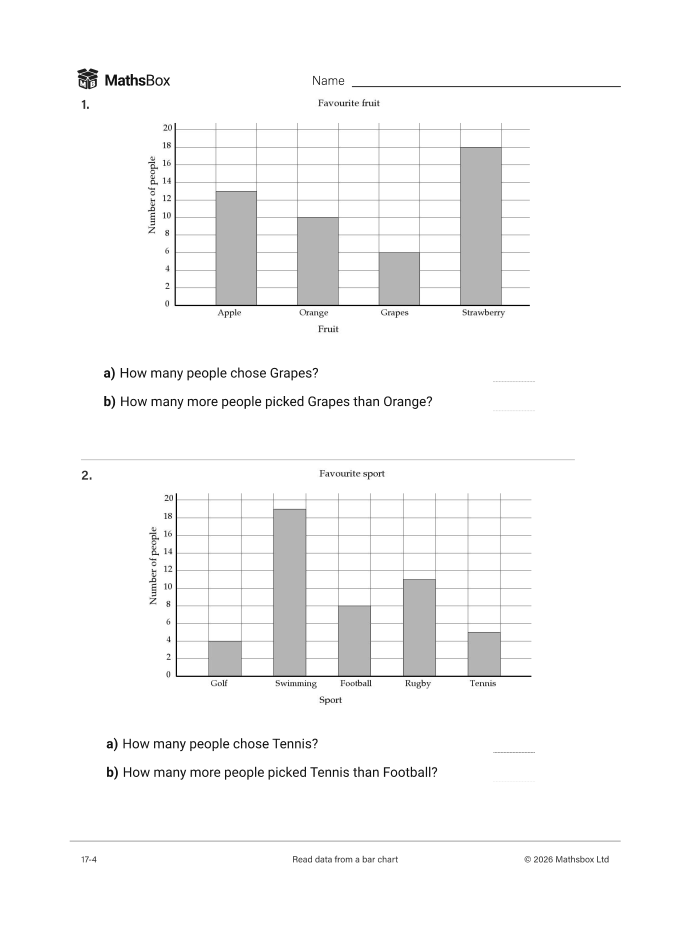
An Entry Level worksheet: writing numbers up to 100An Entry Level worksheet: reading bar charts

Need something more custom? Make your own.

Every Entry Level outcome has its own Question Generator topic. Choose a format and make fresh questions with answers, as often as you like.

  • A topic for every outcome
  • Custom worksheets, games and exit tickets
  • New questions every time, with answers
Try the Question Generator

Topics covered

AQA Entry Level Maths: 140 outcomes and 526 worksheets. Every outcome has Set A, Set B and Set C worksheets with answers, and a Question Generator topic to make more.

Unit 1 · Properties of number

Level 1

7 outcomes · 20 worksheets

  • 1.1Count reliably up to 20 items
  • 1.2Read numbers up to 20 including zero
  • 1.2Write numbers up to 20 including zero
  • 1.2Order numbers up to 20, including zero
  • 1.2Compare numbers up to 20, including zero
  • 1.3Complete a number line up to 20 (increasing)
  • 1.3Complete a number line up to 20 (decreasing)
Level 2

8 outcomes · 26 worksheets

  • 2.1Write numbers up to 100
  • 2.1Read numbers up to 100 including zero
  • 2.1Order numbers up to 100 including zero
  • 2.1Compare numbers up to 100, including zero
  • 2.2Recognise place value in two digit numbers
  • 2.3Count from 0 in steps of two, three and five
  • 2.4Round numbers less than 100 to the nearest 10
  • 2.5Understand and identify odd and even numbers

Level 3

12 outcomes · 39 worksheets

  • 3.1Read numbers up to 1,000
  • 3.1Write numbers up to 1,000
  • 3.2Order numbers up to 1,000
  • 3.2Compare numbers up to 1,000
  • 3.3Recognise place value in three digit numbers
  • 3.4Round numbers less than 1,000 to the nearest 10
  • 3.5Round numbers less than 1,000 to the nearest 100
  • 3.6Find 10 more or less than a given number
  • 3.6Find 100 more or less than a given number
  • 3.7Recognise multiples of 2, 5 and 10
  • 3.7Recognise multiples 10, 50 and 100
  • 3.7Recognise and use multiples of 2, 3, 4, 5, 8, 10, 50 and 100

Unit 2 · The four operations

Level 1

3 outcomes · 18 worksheets

  • 1.1Add two whole numbers with a total of up to 20
  • 1.2Subtract one number up to 20 from another
  • 1.3Understand and use the + and - signs to solve simple number problems

Level 2

5 outcomes · 24 worksheets

  • 2.1Add whole numbers with a total up to 100
  • 2.2Subtract one number up to 100 from another
  • 2.3Multiply using single digit whole numbers
  • 2.4Use and interpret +, -, ×, ÷ and = in real-life situations for solving problems
  • 2.5Recall and use multiplication facts for the 2, 5 and 10 multiplication tables

Level 3

7 outcomes · 45 worksheets

  • 3.1Add and subtract using three digit numbers
  • 3.2Multiply a two digit whole number by a single digit whole number
  • 3.3Divide a two digit whole number by a single digit whole number
  • 3.4Use an interpret +, -, ×, ÷ and = in real-life situations for solving problems
  • 3.5Use inverse operations to find missing numbers
  • 3.6Estimate the answer to a calculation
  • 3.7Recall and use multiplication facts for the 3, 4 and 8 multiplication tables

Unit 3 · Ratio

Level 1

3 outcomes · 18 worksheets

  • 1.1Understand equality
  • 1.2Identify or show one half of a quantity up to 20
  • 1.3Work out half of an even number up to 20

Level 2

5 outcomes · 24 worksheets

  • 2.1Identify or show one third or one quarter of a quantity up to 24
  • 2.2Work out one third or one quarter of a quantity up to 24
  • 2.3Count in fractions of one half or one third or one quarter
  • 2.4Work out amounts two, three or four times the size of a given amount
  • 2.5Recognise the equivalence of ½ and 2/4

Level 3

7 outcomes · 27 worksheets

  • 3.1Identify or show unit fractions up to one tenth of a quantity up to 100
  • 3.2Work out unit fractions up to one tenth of a quantity up to 100
  • 3.3Identify or show any number of thirds, quarter, fifths or tenths of a quantity
  • 3.4Work out any number of thirds, quarters, fifths or tenths of an amount
  • 3.5Recognise and identify equivalent fractions
  • 3.6Add and subtract fractions with the same denominator
  • 3.7Work out amounts 5,8 or 10 times the size of a given amount

Unit 4 · Money

Level 1

3 outcomes · 9 worksheets

  • 1.1Recognise coins and notes up to £20
  • 1.2Exchange money up to 20p for an equivalent amount in other denominations
  • 1.3Add up to 20 coins

Level 2

5 outcomes · 18 worksheets

  • 2.1Appreciate the purchasing power of amounts of money (coins)
  • 2.2Convert from pence to pounds and vice versa
  • 2.3Make amounts of money up to £2 from given coins
  • 2.4Make amounts of money in multiples of £5 from £5, £10 and £20 notes
  • 2.5Calculate with amounts of money in pence up to £1 and whole pounds up to £100 and give change

Level 3

7 outcomes · 21 worksheets

  • 3.1Appreciate the purchasing power of amounts of money (notes)
  • 3.2Exchanged notes for an equivalent value in coins
  • 3.3Use decimal notation for money
  • 3.4Interpret a calculator display
  • 3.5Solve real life problems involving what to buy and how to pay
  • 3.6Add amounts of money and give change
  • 3.7Carry out investigations involving money

Unit 5 · Calendar and time

Level 1

4 outcomes · 12 worksheets

  • 1.1Know the days of the week and their order
  • 1.2Read the time to the hour or half hour on an analogue clock
  • 1.2Draw the hands on a clock to show times
  • 1.3Order familiar events

Level 2

9 outcomes · 33 worksheets

  • 2.1Know the seasons and months and their order
  • 2.2Know that 1 week = 7 days; 1 day = 24 hours
  • 2.2Know that 1 hour= 60 minutes; 1 minute = 60 seconds
  • 2.3Read the time displayed on an analogue or 12 hour digital clock in half hours and quarter hours
  • 2.3Draw the hands on a clock or the digital display to show times
  • 2.4Read the time to the nearest five minutes on an analogue clock
  • 2.4Draw the hands on the clock to show the time
  • 2.4Draw the hands on the clock to show the time given on a digital clock
  • 2.5Find the difference between two times given in hours, half hours and quarter hours

Level 3

8 outcomes · 33 worksheets

  • 3.1Solve problems involving time
  • 3.2Know that there are 365 days in a year, 366 days in a leap year, 12 months in a year and 52 full weeks in a year
  • 3.3Use a calendar and write the date (day/month/year)
  • 3.4Tell and write the time from an analogue clock, including using Roman numerals from I to XII
  • 3.5Understand and use the 12-hour and 24-hour clock system
  • 3.5Understand and use the 12-hour and 24-hour clock system and convert from one system to the other
  • 3.6Convert between hours, minutes and seconds
  • 3.7Add up to three lengths of time given in minutes and hours

Unit 6 · Measures

Level 1

3 outcomes · 9 worksheets

  • 1.1Compare lengths, heights, weights and capacities
  • 1.2Give the length of a line drawn on a centimetre grid
  • 1.3Describe capacity in fractions

Level 2

5 outcomes · 15 worksheets

  • 2.1Choose appropriate standard units of length, capacity and weight
  • 2.2Compare and order lengths, capacities and weights in the same units
  • 2.3Select a possible length, capacity or weight for a given item
  • 2.4Measure or draw a length using a ruler
  • 2.5Estimate the weight , capacity or length of given items

Level 3

7 outcomes · 36 worksheets

  • 3.1Add lengths, capacities and weights
  • 3.2Convert standard units of length, capacity and weight
  • 3.3Compare and order lengths, capacities and weights in the different standard units
  • 3.4Measure the perimeter of a simple shape
  • 3.5Choose an appropriate measuring instrument
  • 3.6Read values from an appropriate scale
  • 3.7Read and compare temperature with negative values

Unit 7 · Shape and space

Level 1

3 outcomes · 9 worksheets

  • 1.1Recognise and name squares, rectangles, triangles, circle and cubes
  • 1.2Compare and order a group of shapes of different sizes and recognise congruent shapes
  • 1.3Use and understand positional vocabulary

Level 2

5 outcomes · 15 worksheets

  • 2.1Recognise and name shapes including pentagons, hexagons and octagons and identify a right-angles triangle from a set of triangles
  • 2.2Recognise and name cuboids, pyramids and spheres
  • 2.3Describe the properties of 2D shapes, including straight and curved edges
  • 2.4Describe the properties of solids
  • 2.5Understand angle as a measure of turn

Level 3

7 outcomes · 24 worksheets

  • 3.1Recognise and name prisms, cylinder and cones
  • 3.2Draw lines of symmetry on shapes or pictures
  • 3.3Recognise and draw nets of cubes and cuboids
  • 3.4Identify whether an angle is less or more than a right angle
  • 3.5Identify horizontal, vertical and parallel lines
  • 3.6Denote the position of a point on a grid by its coordinates or identify a point or item given its coordinates
  • 3.7Use North (N), East (E), South (S) and West (W) to give directions or position from a map

Unit 8 · Handling data

Level 1

3 outcomes · 9 worksheets

  • 1.1Sort and classify objects using a single criteria
  • 1.2Interpret and draw conclusions from a list or group of objects
  • 1.3Construct and interpret simple line graphs

Level 2

6 outcomes · 18 worksheets

  • 2.1Sort and classify objects using more than one criterion
  • 2.2Collect information by survey
  • 2.3Record results in lists, tally charts and tables
  • 2.4Construct and interpret pictograms where one picture represents one item
  • 2.4Interpret pictograms where one picture represents one item
  • 2.5Interpret simple tables

Level 3

8 outcomes · 24 worksheets

  • 3.1Construct bar charts with the vertical axis scaled in ones or twos
  • 3.2Construct pictograms where one picture represents more than one item
  • 3.3Extract numerical information bar charts
  • 3.3Extract numerical information from pictograms
  • 3.4Complete a frequency table given the original list of results
  • 3.5Complete a tally chart and the resulting frequency table
  • 3.6Compare two or more diagrams
  • 3.7Solve one-step and two-step problems based on statistical information

Year 3 to A Level

Get started with MathsBox today

Skills checks, mental arithmetic, the Question Generator and thousands of printable resources, ready for your next lesson.

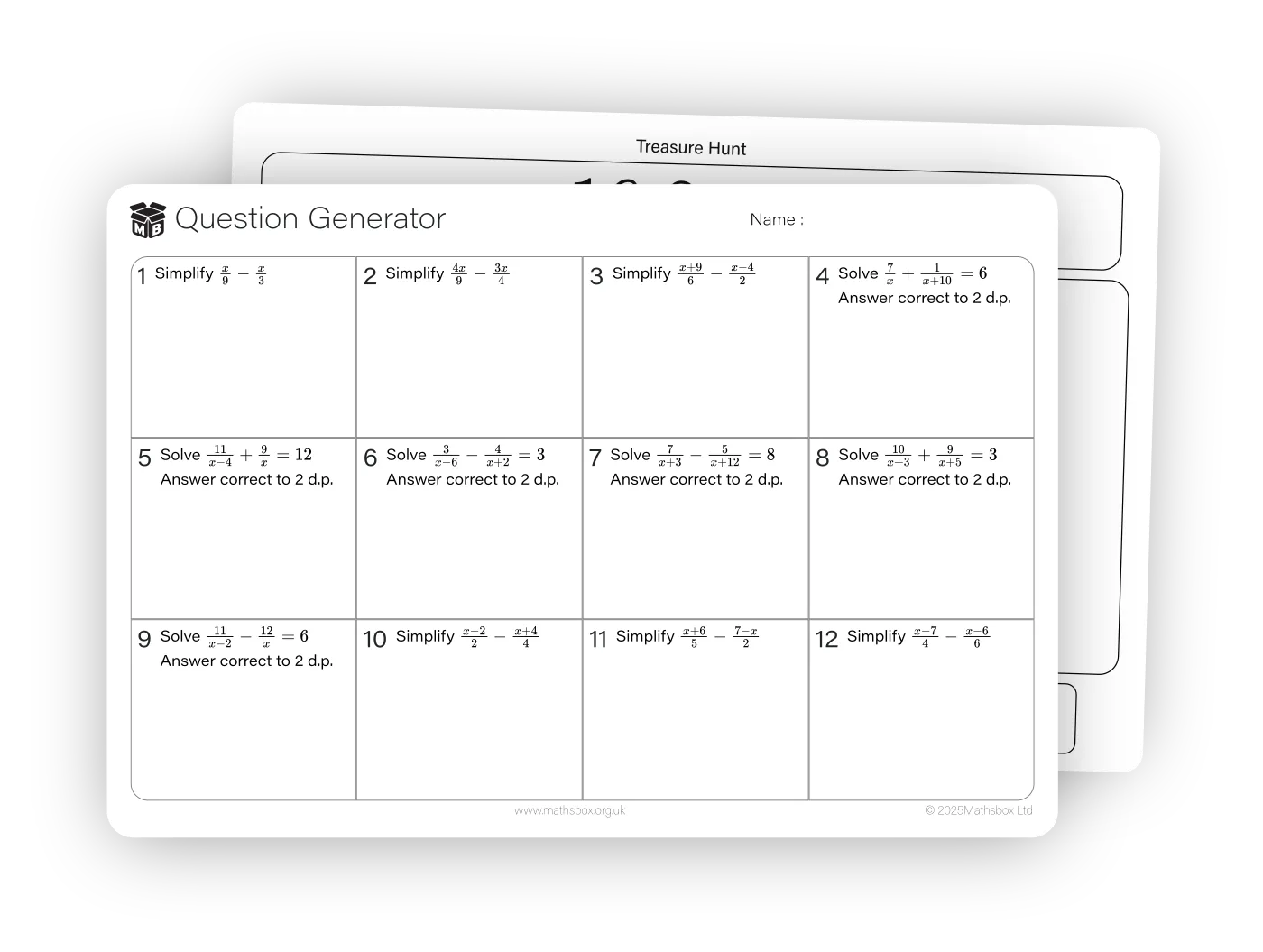
A worksheet made with the MathsBox Question Generator