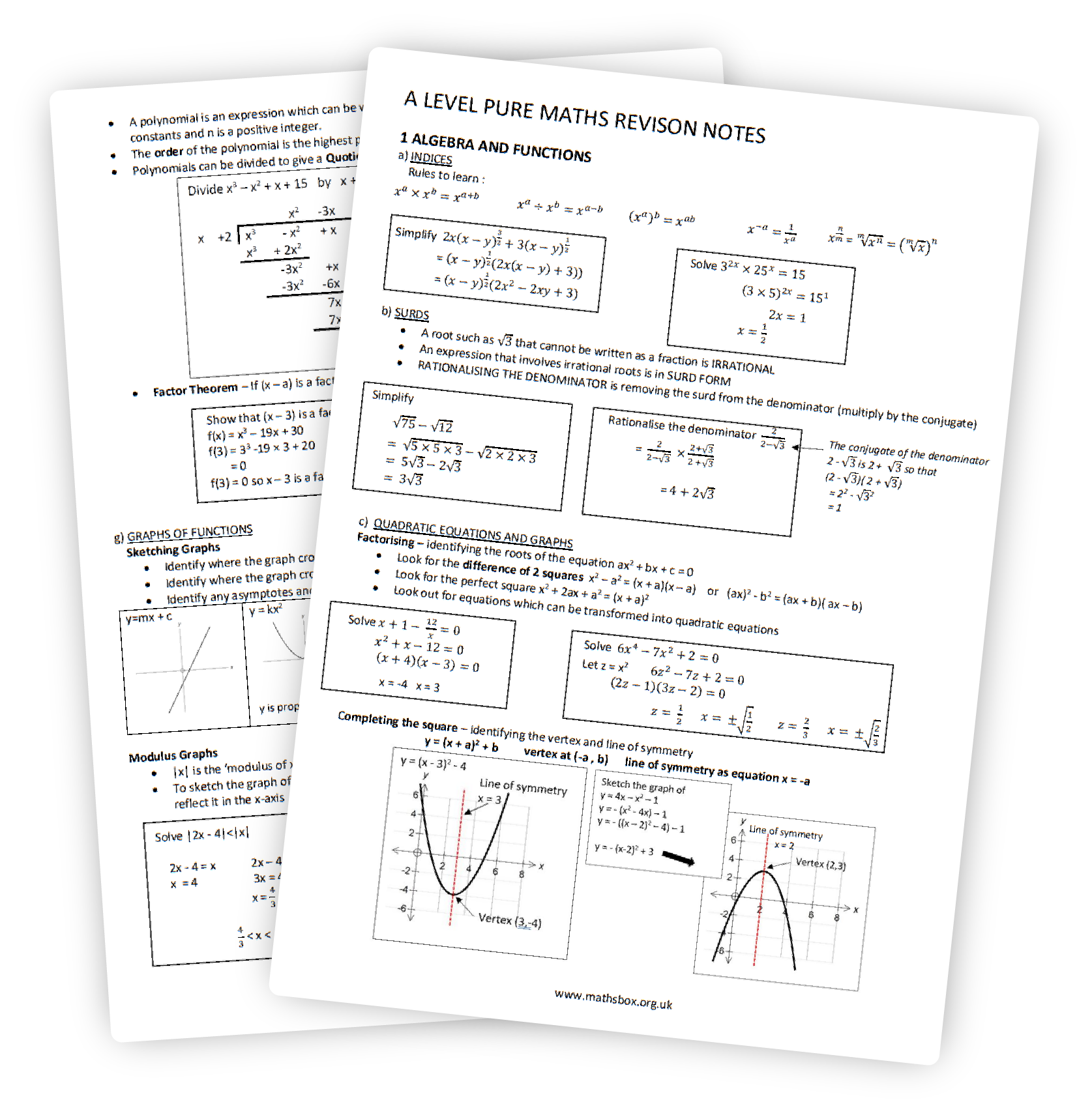
What's available for A Level Maths
Everything you need to deliver engaging, effective maths lessons for AS and A Level Mathematics and Further Mathematics. From ready-to-use worksheets to powerful question generators, we've got you covered.
- 700+ resources with answers, for AS and A Level Maths and Further Maths topics, ready to print or project
- Comprehensive coverage of the AS and A Level Pure Mathematics specification with the question generator to create unlimited custom worksheets tailored to your students' needs
- Flexible formats - worksheets, questions to project, skills checks, treasure hunts, revision notes, bingo games and more
3 Questions print/project
Topic specific questions to print or project with 3 questions and worked solutions in each set focusing on a particular topic.
- AS and A Level Maths: Each 'topic' has 2 different sets of questions, Set A and Set B, plus a printable version of Set A. There are 3 questions and worked solutions in each 'set' focusing on a particular topic.
- Further Maths: Options to either print or project for each topic.
- Resource counts: AS Level: 168 resources | A Level: 174 resources | Further Maths: 76 resources
- Covers AS Level Maths, A Level Maths and A Level Further Maths. See topics covered below:
- Indices
- Simplifying expressions with indices
- Solving equations involving indices
- Mixed questions with indices
- Surds
- Simplifying expressing involving surds
- Expanding a single bracket involving surds
- Expanding a double bracket involving surds
- Difference of 2 squares involving surds
- Rationalising the denominator
- Mixed questions with surds
- Factorising
- x² ± bx ± c
- ax² ± bx ± c
- Completing the square
- Using the quadratic formula
- Calculating and using the discriminant
- Calculating the discriminant
- Using the discriminant (1)
- Using the discriminant (2)
- Solving inequalities
- Solving linear inequalities
- Solving Quadratic inequalities
- Simultaneous Equations
- Solving simultaneous equations
- Polynomials
- Expanding brackets and division
- Expanding 2 brackets
- Expanding 2 or 3 brackets
- Algebraic division
- The factor Theorem
- Factor Theorem (1)
- Factor Theorem (2)
- Factor Theorem (3)
- Using the remainder theorem
- Mixed questions
- Graphs and Functions
- Graph of quadratic functions
- Symmetry and identify the vertex (1)
- Symmetry and identify the vertex (2)
- Sketching graphs of quadratic functions
- Transforming graphs
- Reflections
- Translations
- Stretches
- Mixed transformations(1)
- Mixed Transformations (2)
- Coordinate Geometry
- Straight line graphs
- Equation of a line given the gradient and a point
- Equation of a line given 2 point
- Equation of parallel and perpendicular lines (1)
- Equation of parallel and perpendicular lines (2)
- Calculate the length of a line segment
- Circles and tangents
- Finding the equation of a circle
- Finding the equation of a tangent to a circle
- Points of intersection of a line and a circle
- Exponentials and logarithms
- Simplifying using the laws of logarithms
- Solving equations(1)
- Solving equations(2)
- Binomial Expansion
- Expansion of (1 ± ax)^n
- Expansion of (a ± bx)^n
- Expansion Mixture
- Finding a specific term or coefficient
- Trigonometry
- Equations involving the cosine ratio - multiple solutions
- Equations involving the cosine ratio - multiple solutions
- Equations involving the tangent ratio - multiple solutions
- Mixed equations - multiple solutions
- Solving equations using tanx = sinx/cosx
- Solving equations using sin²x + cos²x = 1
- Sine and cosine rules
- Using the sine rule
- Using the cosine rule
- Differentiation
- Differentiation (1)
- Differentiation (2)
- Differentiation (3)
- Differentiation (4)
- Tangents and normals
- Equation of a tangent to a curve
- Equation of a normal to a curve
- Find the point with a given gradient
- Minimum and maximum values
- Find the coordinates of minimum and maximum points
- Use the second derivative to find the nature of a stationary point
- Integration
- Integration (1)
- Integration (2)
- Integration (3)
- Integration (4)
- Finding f(x) given f'(x)
- Kinematics
- Distance and displacement
- Speed and velocity
- Acceleration
- Constant acceleration formulae
- Kinematics
- Newton's second law
- Newton's second law - vectors
- Connected Particles
- Application of Forces
- Variable Acceleration
- Variable acceleration
- Variable acceleration - vectors
- Data Processing
- Mean and median (1)
- Mean and median (2)
- Median and IQR
- Standard Deviation
- Standard Deviation and IQR
- Probability
- Using sample spaces and tree diagrams
- Probability and Venn diagrams (1)
- Probability and Venn diagrams (2)
- Binomial Distribution
- Calculating Probabilities
- Expectation
- Hypothesis testing
- Hypothesis testing - critical values
- Differentiation Methods
- Chain rule (1)
- Chain rule (2)
- Differentiating trigonometric functions
- Differentiation of functions involving ln and e
- Product rule
- Quotient rule
- Mixture
- Implicit differentiation
- Finding the equations of tangents and normals
- Differential equations
- Solving by separating the variables
- Functions and graphs
- Finding the domain and range
- Finding and using composite functions
- Finding inverse functions
- Modulus functions
- Sketching graphs of modulus functions
- Solving modulus equations (linear)
- Solving modulus equations (quadratic)
- Transforming graphs
- Stretch and translation
- Stretch and reflection
- Translation and reflection
- Mixture
- Integration
- Integration of trigonometric functions
- Integration of functions involving e
- Integration by inspection
- Integration by substitution
- Integration by parts (1)
- Integration by parts (2)
- Integration using the double angle formulae
- Integration using partial fractions
- Integration – parametric equations
- Integration – mixture (1)
- Integration – mixture (2)
- Integration – mixture (3)
- Volumes of revolution
- Exponentials and logarithms
- Solving equations involving exponents (1)
- Solving equations involving exponents (2)
- Solving equations (3)
- Solving equations (4)
- Growth and decay
- Numerical methods
- Using iterative formulae
- Numerical integration
- Parametric equations
- Changing to cartesian form
- Differentiating
- Finding the equations of tangents and normals
- Integration – parametric equations
- Arithmetic Series
- Mixture (1)
- Mixture (2)
- Finding the sum of a series
- Evaluating totals given in summation form
- Geometric Series
- Mixture (1)
- Mixture (2)
- Finding the sum of a series
- Finding the sum to infinity of a series
- Binomial series
- Expanding (1 ± ax)^n
- Expanding (a ± bx)^n
- Finding specific coefficients
- Partial fractions and the binomial series
- Rational expressions
- Addition of rational expressions
- Multiplying rational expressions
- Dividing rational expressions
- Partial fractions
- Partial fractions (1)
- Partial fractions (2)
- Partial fractions (3)
- Trigonometry
- Proof
- Solving equations (1)
- Solving equations (2)
- Solving equations (3)
- Using the addition formulae (1)
- Using the addition formulae (2)
- Solving equations using Rcos(A ± B) and RSin(A ± B)
- Graphs of inverse functions
- Graphs of reciprocal functions
- Vectors
- Calculating the magnitude
- Identifying parallel and perpendicular lines
- Calculating the angle between two vectors
- Mixture
- Mechanics
- Friction
- Coefficient of friction – horizontal surface
- Projectiles
- Projectiles (1)
- Moments
- Uniform rods
- Non-uniform rods
- Statistics
- Probability
- Conditional probability (1)
- Conditional probability (2)
- Probability from a table
- Probability distributions – discrete random variable
- Normal distribution
- Calculating probabilities
- Normal and binomial problems
- Inverse problems
- Calculating the mean and standard deviation
- Binomial approximation
- Sampling distributions
- Hypothesis testing
- Hypothesis testing
- Hypothesis testing – critical regions
- Correlation coefficient
- Calculus
- Volumes of revolution
- Surface area generated
- Surface area generated (cartesian)
- Surface area generated (parametric)
- Arc Length
- Arc Length (cartesian)
- Arc Length (parametric)
- Mean value of a function
- Integration – Partial fractions
- Integration – Improper integrals
- Integration – Reduction formulae
- Differentiation – Inverse trigonometric functions
- Integration – using substitution of trigonometric functions
- Complex Numbers
- Equating real and imaginary parts
- Complex roots of equations
- Argand diagrams
- Modulus-argument form
- Complex loci
- Exponential form
- De Moivre's Theorem
- Complex roots (including unity)
- Graphs of functions
- Sketching graphs of modulus functions
- Sketching graphs of rational functions
- Sketching graphs of ellipses, parabolas, and hyperbolas
- Tangents and Normals
- Tangents, normals, and stationary points (using the discriminant)
- Tangents and normals
- Transforming graphs
- Differential Equations
- First Order
- 1st order differential equations (1)
- Integrating factor – general solution
- Integrating factor – particular solution
- Second Order
- 2nd order differential equations – general solution
- 2nd order differential equations – particular solution (1)
- 2nd order differential equations – particular solution (2)
- Simple Harmonic Motion
- Simple Harmonic Motion (1)
- Simple Harmonic Motion (2)
- Simple Harmonic Motion (3)
- Damped and forced Harmonic Motion (1)
- Damped and forced Harmonic Motion (2)
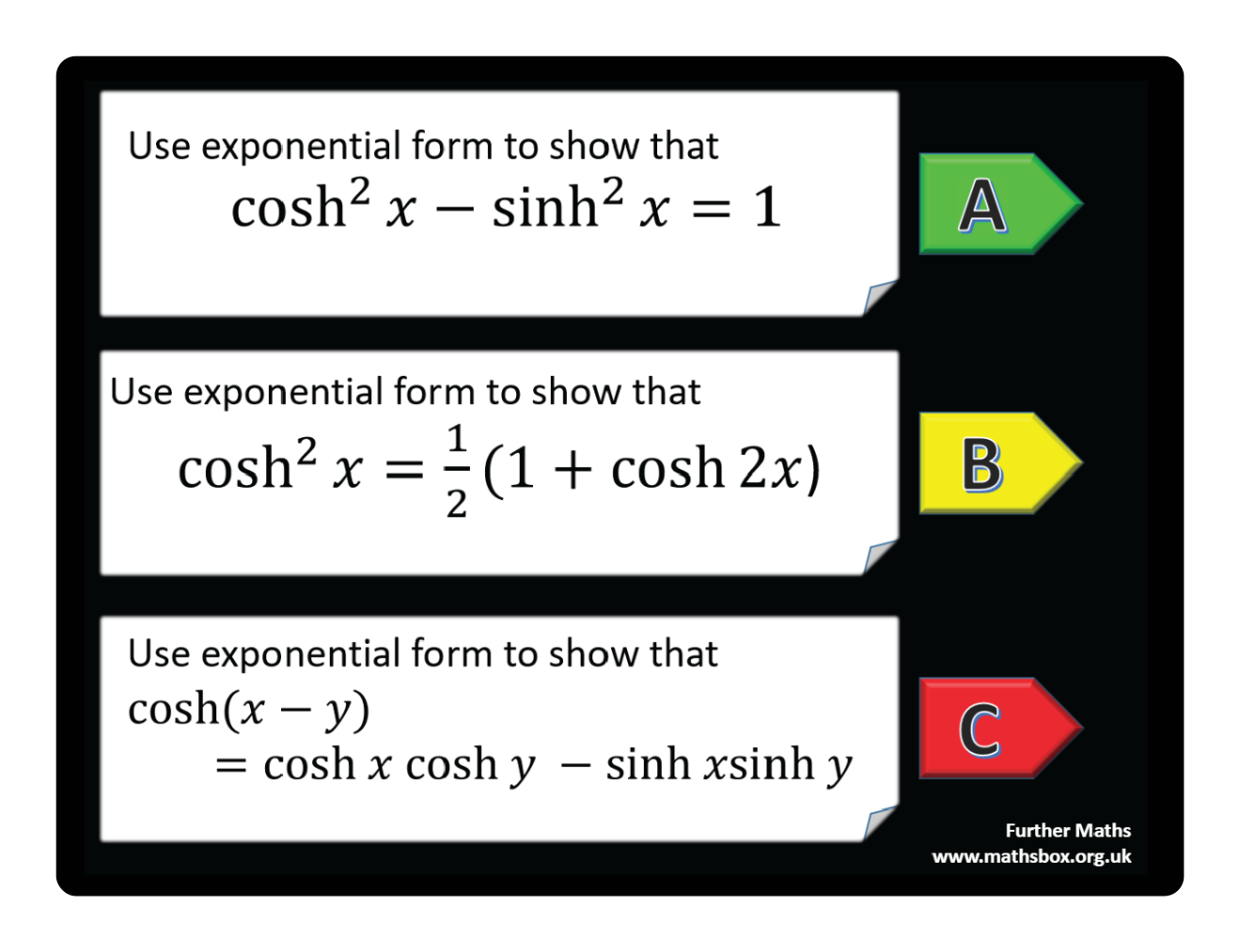
- Hyperbolic Functions
- Evaluating in exact form
- Solving simple equations
- Proof of identities
- Double angle formulae
- Solving equations
- Inequalities
- Rational functions – inequalities
- Modulus / Absolute functions – inequalities
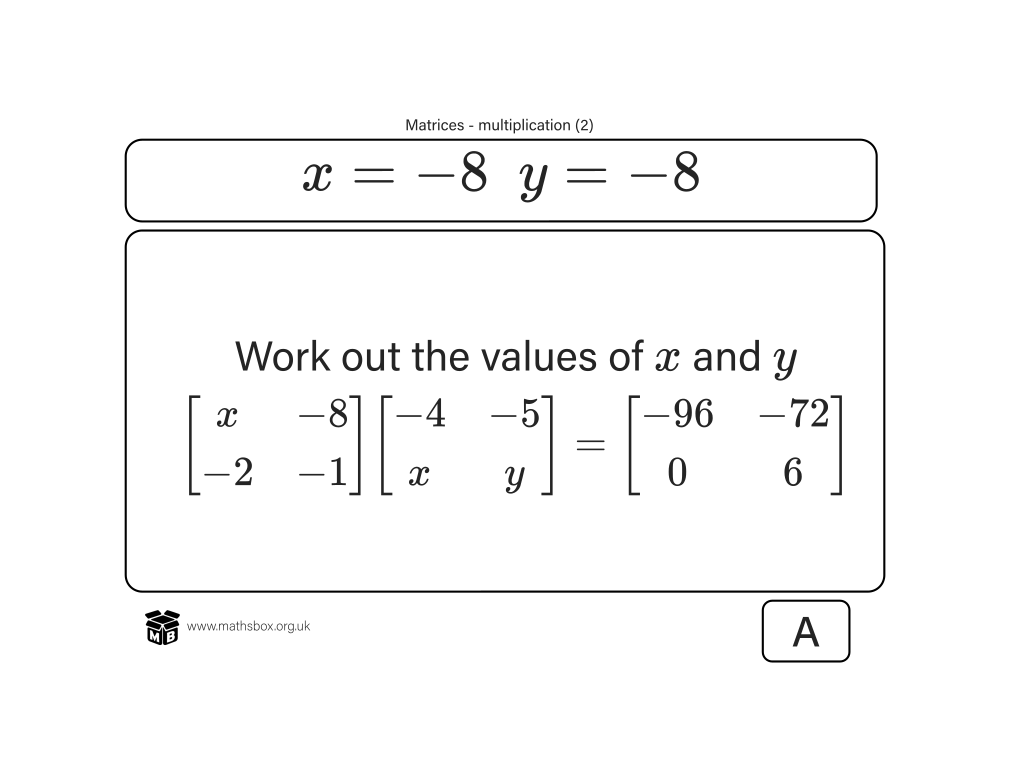
- Matrices
- Arithmetic
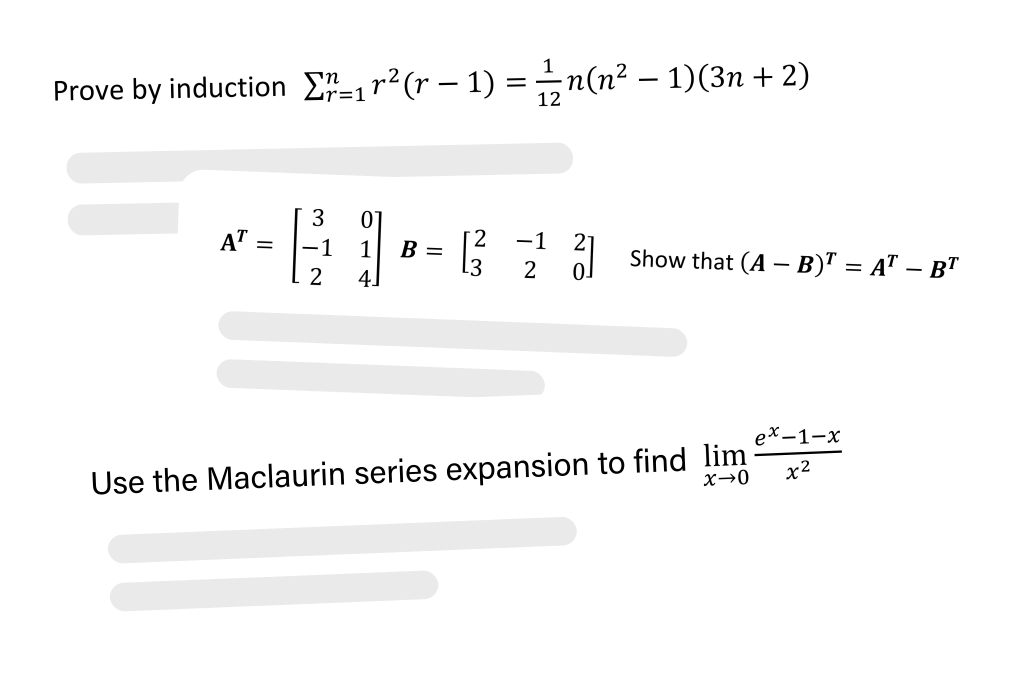
- Proof by induction and transposing
- Identifying and defining transformations
- Transformations and invariant lines
- Determinants
- Inverse matrices
- Solving simultaneous equations
- Expressing as a product of linear factors
- Eigenvalues and eigenvectors
- Diagonalisation
- Polynomial
- Diagonalisation
- Diagonalisation
- Polar Coordinates, Graphs, and Calculus
- Expressing in polar form
- Expressing in cartesian form
- Sketching graphs of polar functions
- Calculating area (1)
- Calculating area (2)
- Proof
- Proof by induction (divisibility)
- Proof by induction (divisibility)
- Proof – method of differences
- Series
- Maclaurin series
- Maclaurin series
- Maclaurin series – limits
- L'Hôpital's Rule – limits
- Vectors
- Vector equation of a line (1)
- Vector equation of a line (2)
- Vector equation of a line (3)
- Intersecting and skew lines
- Using the scalar product
- Using the vector product
- Equations of planes
- Angles between lines and planes
- Shortest distance from a point to a plane
- Shortest distance between 2 lines
Question Generator
Generate unlimited custom worksheets and resources instantly for all AS and A Level Pure topics. Select your topics, choose resource types, and create tailored resources for your lessons.
- 1. Select Resource Type - Choose from worksheets, questions to project, bingo cards, treasure hunts, and much more
- 2. Select Topics - Browse AS and A Level Pure topics, select question structures you need
- 3. Create Resource - Adjust quantities and generate your custom worksheet instantly
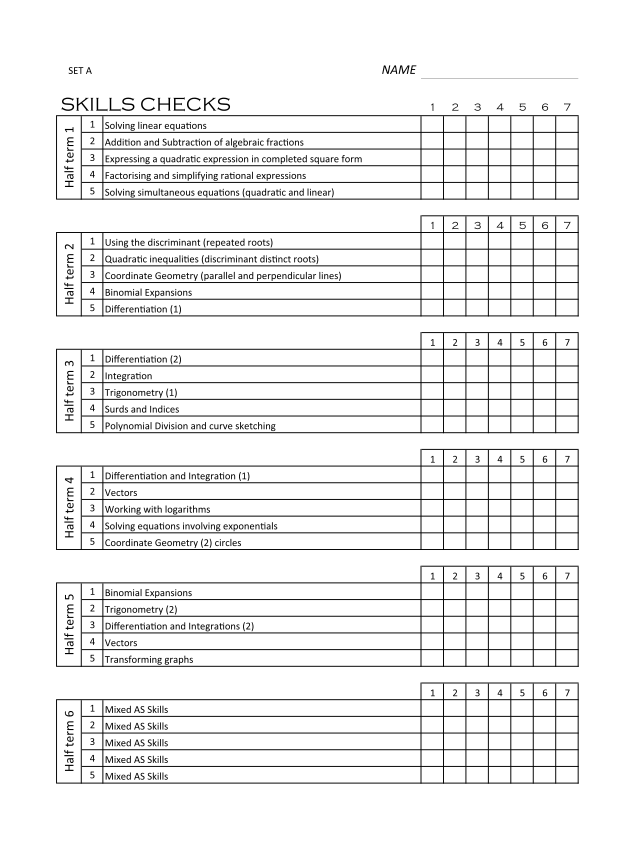
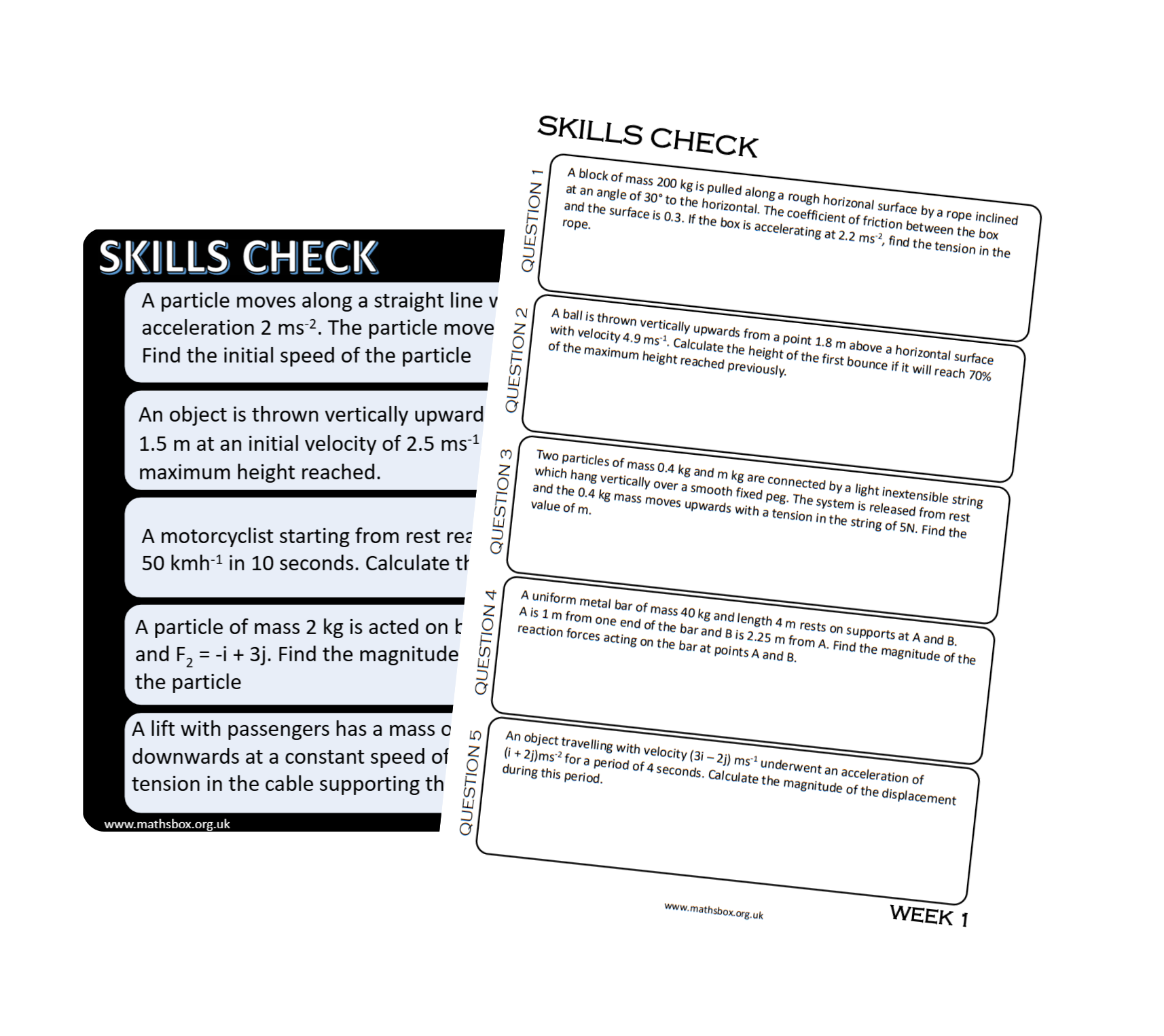
Skills Checks
Over 120 Skills Checks resources are available for AS and A Level Core 1, 2, 3, Mechanics and Statistics.
- Core 1, 2, 3: All cover the same topics but in a different order depending on which scheme you are following. Each core set contains 6 half terms with 5 key skills topics covered in each. There are weekly skills check sets to project along with worksheets to print.
- Mechanics and Statistics: There are 7 sets to project and worksheets.
- All also have associated record sheets to track learning and progress.
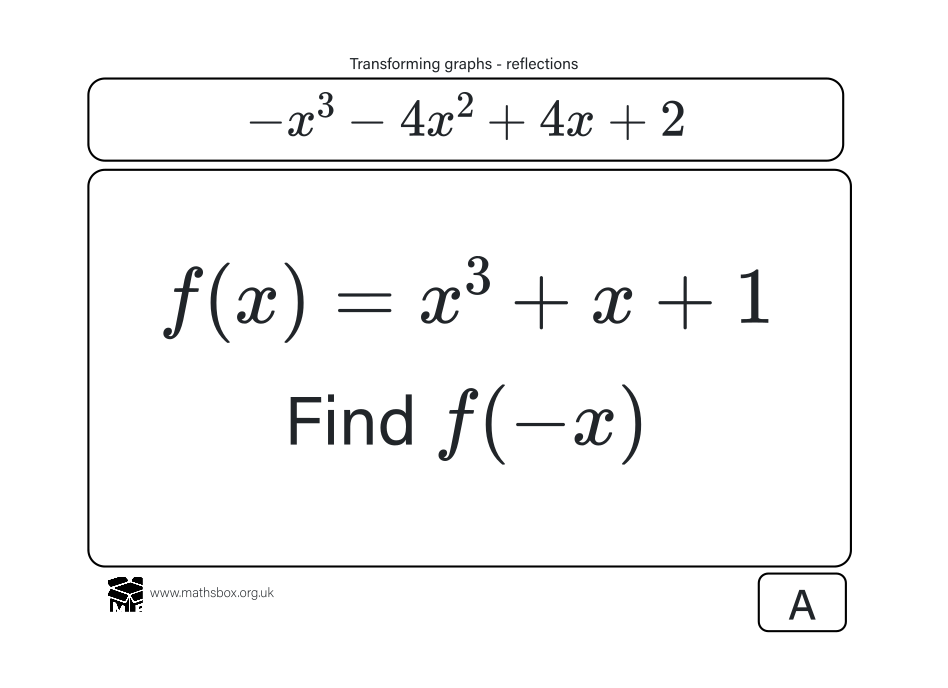
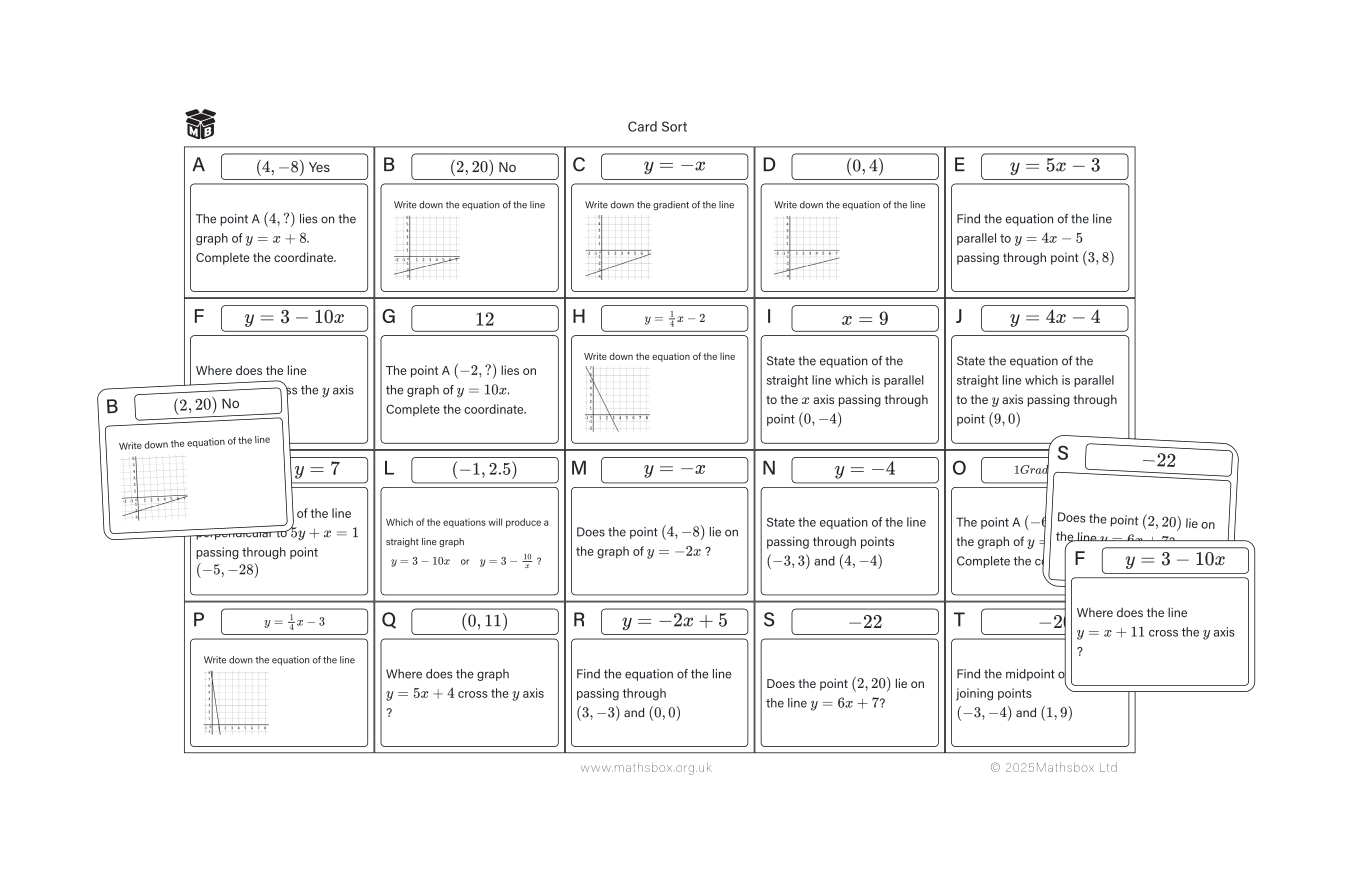
Treasure Hunts
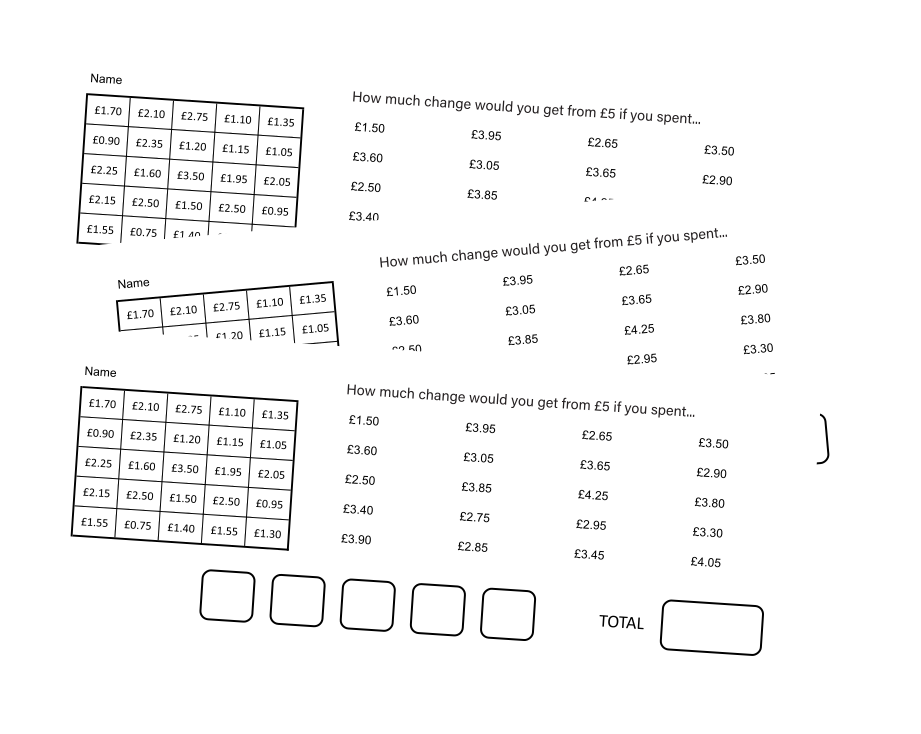
20-question activities that get students moving around the classroom.
How to use: Print the cards and place them around your classroom. Students solve one problem, find the answer on another card, and continue until they complete the loop. Perfect for active learning and revision. Treasure hunts can also be printed as small loop cards for solo/group desk work.
AS Level Maths: 76 Treasure Hunts | A Level Maths: 63 Treasure Hunts OR create unlimited Treasure Hunts for any A Level Pure topic with our Question Generator.
Revision Notes
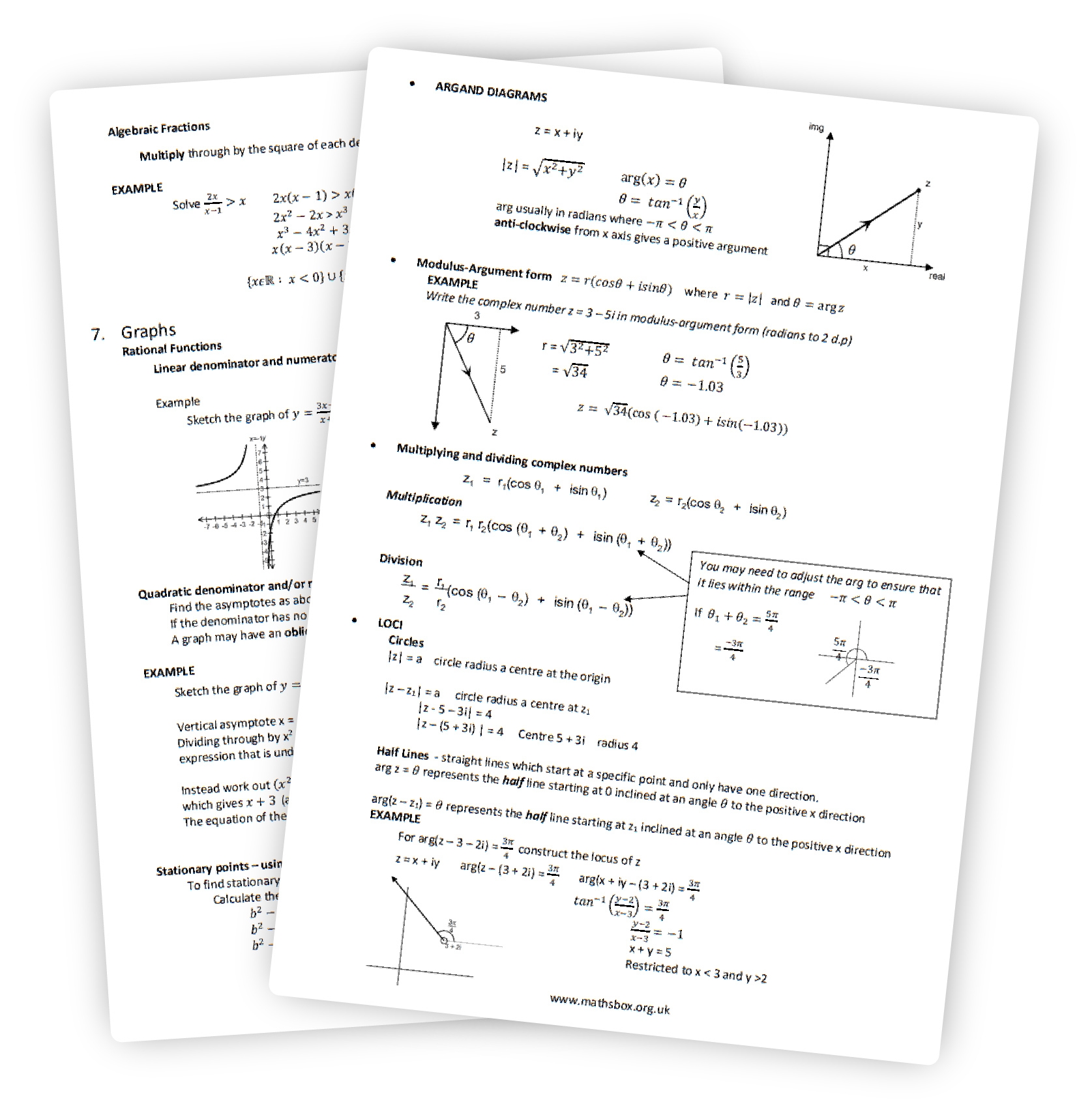
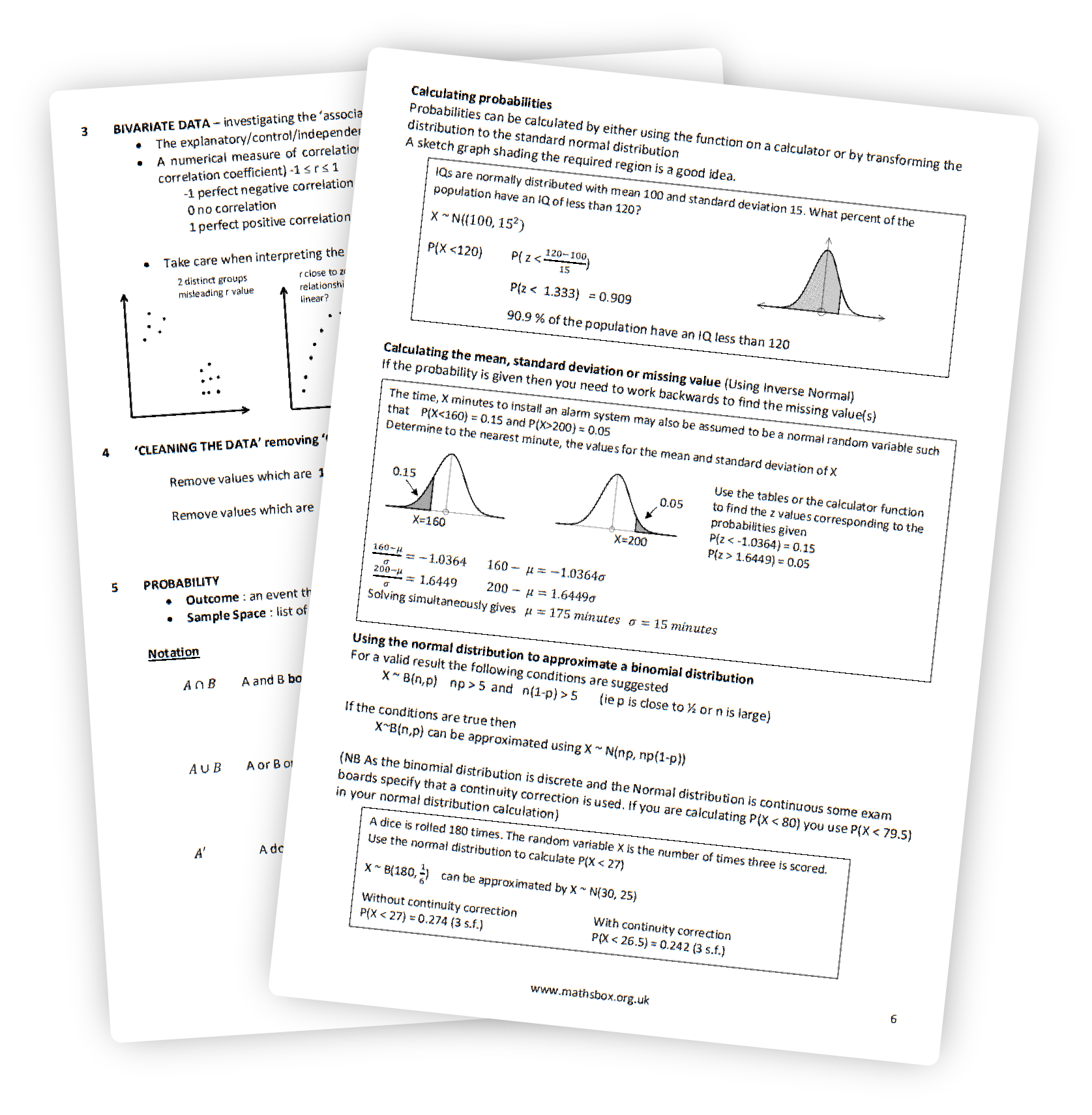
Comprehensive revision notes covering key topics for AS and A Level Mathematics and Further Mathematics.
- AS Level Pure
- AS Level Statistics
- AS Level Mechanics
- A Level Pure Mathematics
- A Level Statistics
- A Level Mechanics
- AS Level Further Maths - AQA
- A Level Further Maths - AQA
- AS Level Further Maths - Edexcel
- A Level Further Maths - Edexcel
- AS Level Further Maths - OCR
- A Level Further Maths - OCR
Frequently Asked Questions
Yes! The Question Generator allows you to select your own AS and A Level Pure topics which have been broken down into question structures. You can create unlimited variations to suit your exact lesson needs.
Yes. All our resources include answers and worked solutions.
Ready to save hours every week?
Join over 25,000 teachers using Mathsbox